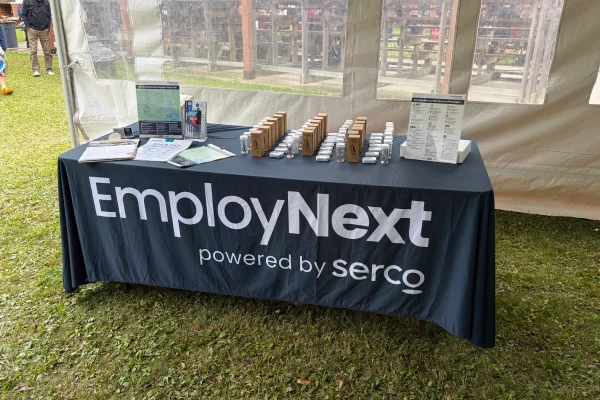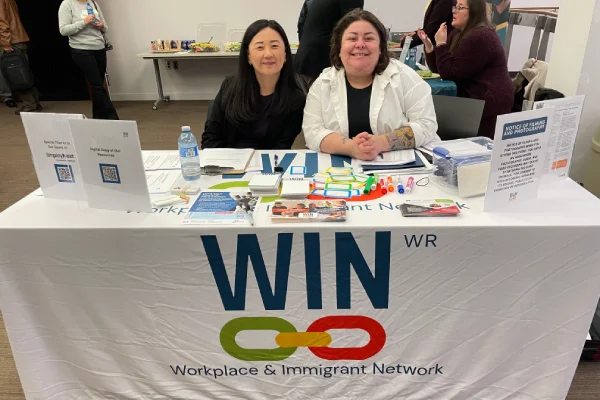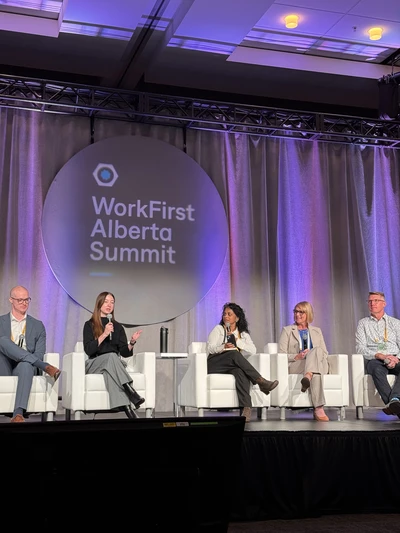
More than 700 workforce development professionals, employers, community organizations, government representatives and employment service providers gathered at the 2026 WorkFirst Alberta Summit to discuss a shared challenge: how can Alberta create stronger and more inclusive employment outcomes?
The two-day event at the Edmonton EXPO Centre highlighted the importance of working as a connected workforce ecosystem rather than as individual organizations. During her opening remarks, Rachel Villatoro, Executive Director of the Employment Branch within Assisted Living and Social Services, described the sector as a “community of champions” working toward a shared vision of connecting people with opportunities and strengthening Alberta’s workforce development community.
Across the Summit panels and discussions, three priorities stood out.
1. Look at the complete job seeker journey
Employment challenges rarely begin or end with a single service. Sustainable outcomes depend on employers, employment service providers, community organizations and wraparound support providers understanding how their work connects.
During a panel featuring prime contractors, service providers and community partners, Kayla Terry, Program Director for EmployNext in Alberta, emphasized the value of mapping the entire employment journey.
“Through mapping one job seeker’s journey from beginning to end and involving everyone in the process, including the job seeker, we can understand and mitigate their challenges, and involve collaborators to work towards a shared goal.”
This approach can help organizations identify service gaps, reduce duplication, and coordinate support around the needs of the individual.
2. Connect training more closely with the workplace
The Summit also highlighted the importance of practical preparation. Simulated worksites and hands-on learning can help job seekers understand workplace expectations, build confidence, and prepare for changing employer needs.
Those efforts must be supported by accessible workplace design, effective onboarding, appropriate technology, and inclusive workplace cultures. Together, these elements can create more supportive employment opportunities and help expand participation in Alberta’s workforce.
3. Turn collaboration into coordinated action
Partnership was a consistent theme throughout the Summit, but partnership must extend beyond exchanging ideas. Better coordination between employment services, employers, government and wraparound support providers can help job seekers address barriers and maintain employment over the longer term.
As Neil Bazzana-Adams, Community Outreach Manager at EmployNext, observed, the event brought government and service-provider perspectives together around a practical question: how can the sector improve its work to better serve Albertans? He also noted that discussions were increasingly focused on action and collaboration within Alberta’s Prime Contractor model.
EmployNext continued those conversations by hosting an evening reception for members of Alberta’s workforce development community. The reception provided space for attendees to build relationships, share ideas, and consider how the sector can work together more effectively.
Building a more connected workforce ecosystem
Through Alberta’s Prime Contractor Framework, EmployNext supports workforce development across Calgary and Southern Alberta. The WorkFirst Alberta Summit reinforced a central lesson from that work: stronger outcomes are created when organizations understand the complete job seeker journey, coordinate their expertise and remain responsive to both individual needs and labour market conditions.