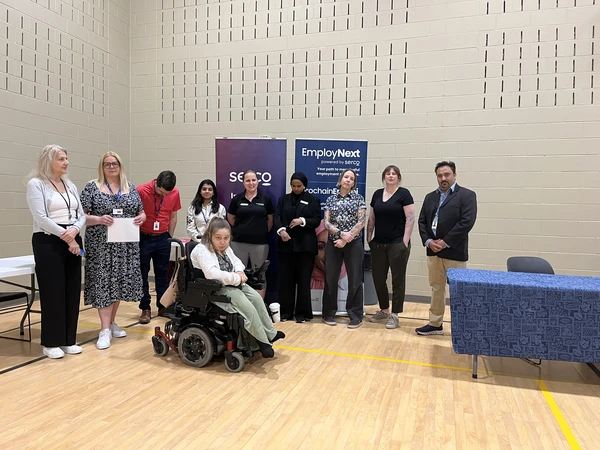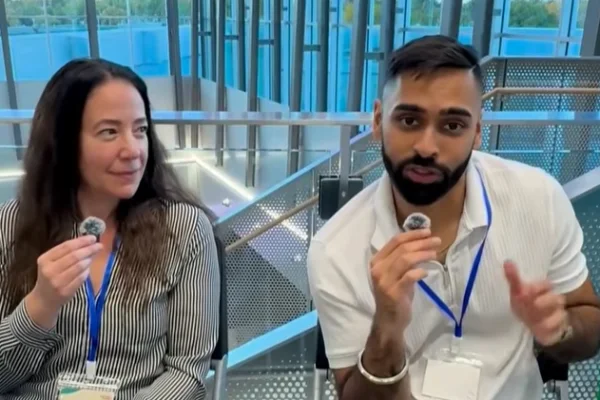
October marks Disability Employment Awareness Month (DEAM), and this year the EmployNext team in Alberta had the opportunity to attend the DEAM IDEA Conference 2026 hosted by the Alberta Employment First Network (AEFN) in Edmonton.
Bringing together employers, employment service providers, disability advocates, and community organizations, the conference served as a multi-day learning and workforce development event focused on advancing inclusive employment practices, workplace accessibility, and disability employment across Alberta.
With changes to disability support programs and the introduction of the Prime Contractor framework, discussions focused on how organizations can adapt while continuing to create meaningful employment opportunities for individuals with disabilities.
Across three days of learning, collaboration, and networking, one message stood out: inclusive hiring and workplace accessibility are no longer standalone initiatives – they are essential components of a modern workforce strategy. With this year’s theme being ‘Leading Through Change’, several key insights emerged for employers looking to build strong and inclusive workplaces.
Inclusive hiring expands access to talent
As labour shortages continue across many industries, employers are increasingly challenged to rethink traditional recruitment practices. Conference sessions highlighted how many qualified candidates remain underrepresented in the workforce despite having the skills, experience, and desire to work.
By intentionally expanding recruitment efforts and engaging talent from underrepresented groups, including individuals with disabilities, organizations will be better positioned to attract larger talent pools and meet future labour market demands.
Recruitment barriers begin before the interview
Barriers begin before an individual arrives at the workplace. Job postings that are not accessible due to Applicant Tracking Systems (ATS) screening, complex application processes, inaccessible websites, and interview practices that unintentionally exclude candidates limit access to employment opportunities.
Through reviewing their recruitment processes with an accessibility lens, simple changes like using plain language job descriptions, alternative text options, interview questions on essential job requirements and large fonts on printed materials can assist in reducing barriers for job seekers.
Accessibility supports retention
Hiring inclusively is only the first step. Creating workplaces where employees can thrive is equally important. Various discussions focused on the practical accommodations that employers can make after an individual is hired.
Captioning team meetings, video remote interpretation, using inclusive language in communications, adding sign-language interpreters to videos and presentations, and making changes to workplace design to make it more accessible are strategies that not only support employees with disabilities but often improve workplace experiences for all staff.
Education drives inclusion
A recurring theme throughout the conference was the importance of continued learning. Various workplace barriers stem from misconceptions, uncertainty, or a lack of understanding rather than intentional exclusion. Providing managers and employees with training on accessibility, accommodations, disability awareness, and inclusive workplace practices helps build confidence and equips teams with the tools needed to support diverse workforces.
Looking ahead
The DEAM IDEA Conference 2026 reinforced that accessibility, inclusion, and workforce development are closely connected.
As employers navigate evolving workforce demands and changing support systems, organizations investing in inclusive hiring and retention practices are in a better position to find talent and build stronger workplaces for the future.